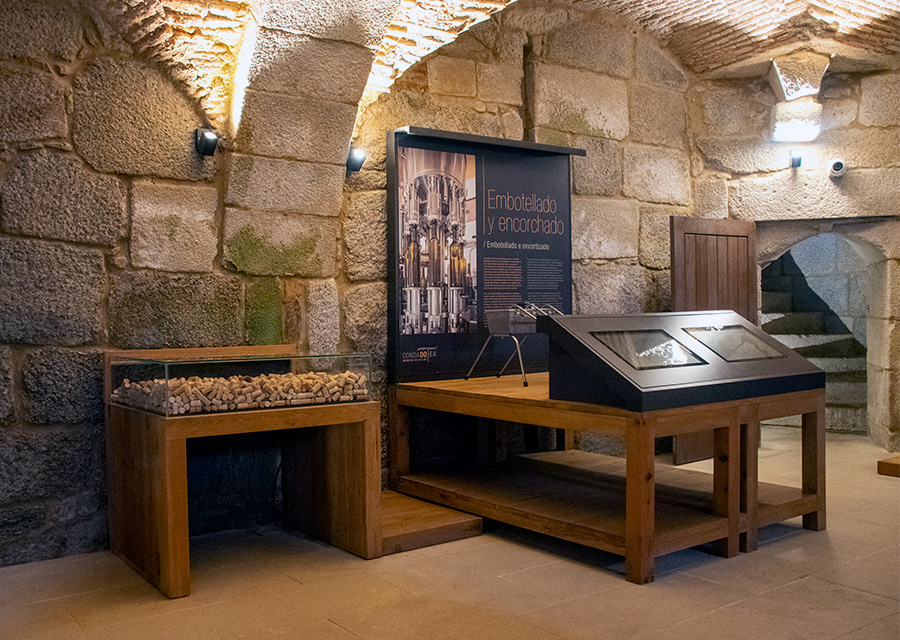
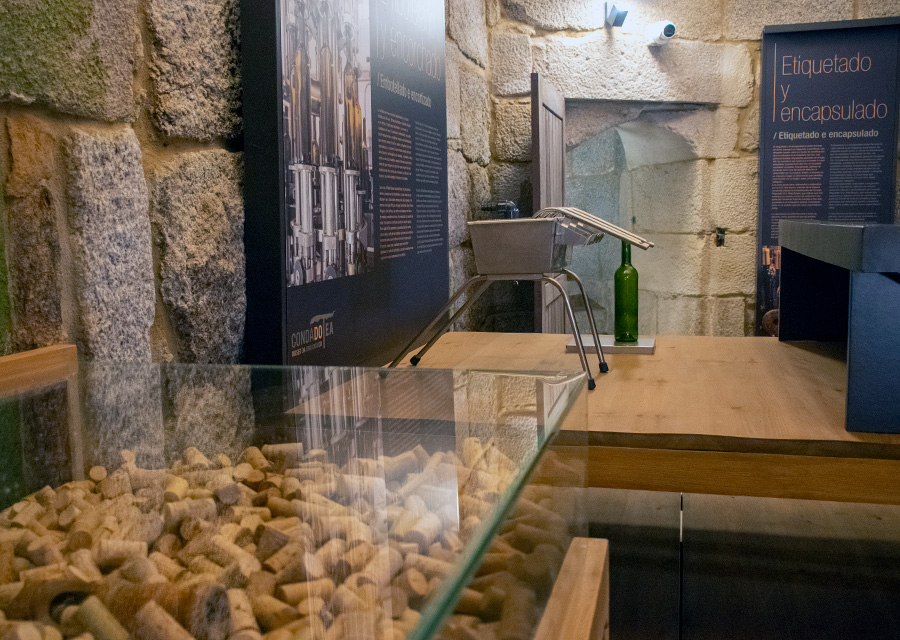
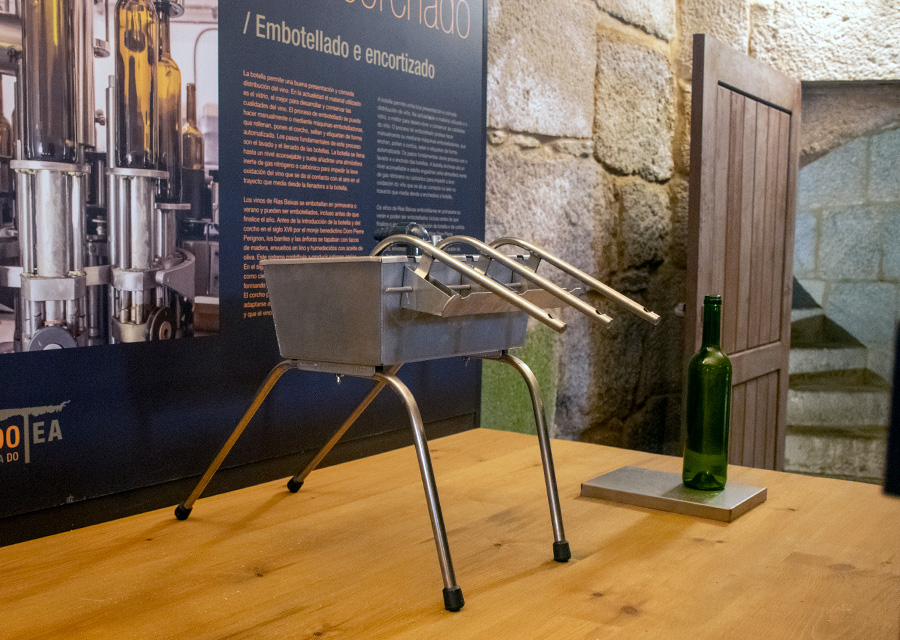
We now come to the bottling and corking process.
Regarding bottling, it can be said that to this day, there is no better method for transporting and preserving our wines than the glass bottle. This is an aseptic material and does not impart any strange aromas or flavors to the wine. And to seal that bottle, we have the cork. As the story goes, it was the French monk Dom Pierre Pérignon who first used this material to seal his famous sparkling wines of Champagne. The Benedictine monk traveled to Santiago de Compostela on a pilgrimage and along the way learned firsthand about the benefits of this material as a useful method for sealing the pilgrims' gourds.
Cork can be of different types: natural, coated, or synthetic. The latter arose from the need to avoid "cork taint," or trichloroanisole, a condition that affects up to 4% of the world's bottled wine and causes the wine to acquire aromas and a taste of wet cardboard. Therefore, it's important not to disqualify a brand because a bottle's cork is in poor condition, as this is the only element a winery cannot control. Some large wineries in our country have even had to recall entire vintages because their corks were defective.
Using natural cork for wine packaging also allows for micro-oxygenation of the wine, enabling it to continue evolving inside the bottle.
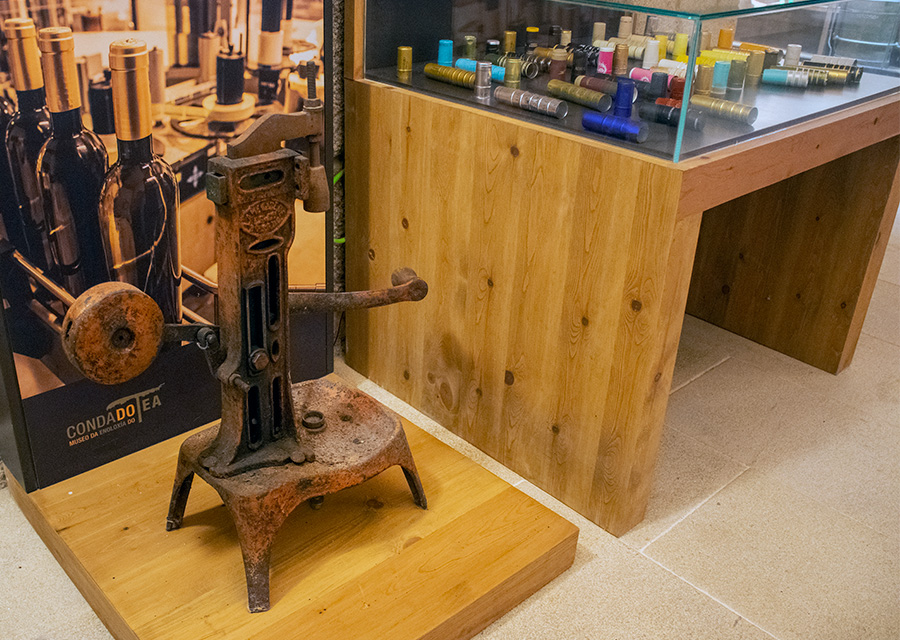
Next, we'll talk about encapsulation. The capsule is the element that seals the bottles and also protects the cork from any external elements that could degrade it.
Finally, we only have labeling, which is the last process a winery carries out before putting one of its wines on the market. A label for our Designation of Origin must include information such as: vintage, grape varieties, bottler's name, alcohol content, and allergen information.
And that concludes our visit to the Condado do Tea Wine Science Museum.
We hope you enjoyed the experience of learning about the intricacies of one of the best wines in our country.